
Let’s start with a nice simple question. What do you know that should bounce?
- Basket balls – Yep
- Kangaroos – Sure
- Rubber – Why not
- Customers – No!
At Traffic 4 Me, we don’t work hard to send you incredible good-quality traffic just for you to send all those prospects bouncing out of the door with bad experiences and poor landing pages. So listen up – we’re going to help you figure out what to do about this bounce problem once and for all.
Today, your prospects are probably spending more time than ever online. That means that they have more time to spend looking at your products – but it also means that they’re bombarded with more marketing clutter than ever – which has made them super skeptical of ads.
Most customers will interpret your honest marketing efforts as a trick that’s pushing them into buying something. Yep – that’s right, your customers are paranoid!
Unfortunately – or fortunately (depending on how you look at it) – marketing is all about giving the people what they want. As a modern marketer, you should know that your aim is to get the right information in front of the right people. After all, that’s the only way to win new customers.
https://pixabay.com/en/bouncing-jump-child-girl-159517/
The Curse of the Bouncy Customer
Nothing keeps you more focused on the reality of proper marketing etiquette than understanding your bounce rate – the number of people who visit your site then instantly leave after looking at a single page. This could mean that your customer clicks on an external link, hits the back button, or just throws their computer out of the window.
Whatever the reason – they’re leaving you like a bad ex.
What’s more important than understanding how your prospects are leaving – is figuring out why. A high bounce rate indicates that your landing pages aren’t making the right first impression. They aren’t giving your visitors the information that they want – otherwise they’d be more inclined to check out the rest of your site.
Fortunately – even if you have a higher bounce rate than a ping-pong tournament – all isn’t lost. The solution is pretty simple – all you have to do is ask your customers what’s wrong. If you just talk to your site’s visitors – shocking, we know – then they could tell you why your page isn’t meeting their expectations.
Is Bouncing Always Bad?
Bounces – from a digital perspective – are pretty complicated. Context is everything when it comes to a bounce rate. For instance, if your girlfriend came home, gave you a kiss, then immediately ran out of the door, you’d be wondering what the heck was going on. But if you knew she had somewhere to be in a hurry – there’d be no problem.
Looking at that from a digital marketing perspective, if someone were to find a 4,000 -word blog you’ve posted via a Google search, read it, and closed the window – this would constitute a bounce. However, if that same person accidentally clicked on your blog, went through to the home page without reading it, then closed out – this wouldn’t be a bounce.
Obviously, this is all a little counter-intuitive, because the visitor who took the time to read your blog is probably more valuable than the one that clicked around without any interest. That’s why you need to keep in mind the distinct goals of your page when you’re figuring out what matters in bounce rates.
Most people in the biz suggest that you should only worry about bounce rates as they relate to specific types of traffic and pages. For instance:
- External traffic – you only really want to measure the bounce for visitors that come to your website after clicking a backlink from somewhere else on the web. Not only that, but you will need to segment that bounce according to where users come from, so you can get rid of bad links.
- Conversion pages – You know those landing pages you include on your email marketing campaigns to convert the traffic you get from Traffic for Me? This are conversion pages. Since these actions take your users to a new page – such as a subscription page or shopping basket – they don’t constitute in bounces.
So, no – bouncing isn’t always a bad thing. But that doesn’t mean that you should just forget all about it. Bad bounces could mean that you end up with fewer conversions, lower profits, and even a worse ranking on the search results of various engines.
Lowering your Bounce Rate with One Question
So if you’ve gone through all of your bounce-rate information and found that people are clicking away from crucial pages too quickly – or for all of the wrong reasons, then you need to fix it- fast.
Don’t worry – we’ve got you covered.
The key to solving your bounce-rate woes is finding the disconnect between what people expect from your landing pages, and what they actually deliver. The simplest way to figure out what the heck is going on? ASK your customers.
Go to your bounciest pages and add a survey that asks one simple question:
Did this page meet your expectations?
Leave a button where customers can click yes or no, and you’ve instantly made it super easy for your customers to tell you what they thought of your landing page without typing out some angry profanity in a comment box.
From there, you can survey even further with a few simple steps:
http://www.funnyjunksite.com/pictures/wp-content/uploads/2012/08/Very-Difficult-Question.jpg
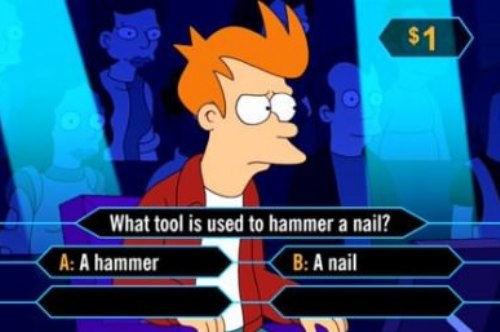 http://www.funnyjunksite.com/pictures/wp-content/uploads/2012/08/Very-Difficult-Question.jpg
1. Target the Right Users
Remember, you only need feedback from users that arrive on your page from clicking through from another website, or using a search engine. This means that you should adapt your survey to target behavior. Sounds complicated – but this is pretty easy to do if you use a survey tool or application that allows you to customize your efforts.
Targeting search traffic is super simple – regardless of where you want to track your customers from (Yahoo, Bing, etc). However, the chances are you’re just gonna want to focus on Google.
Let’s face it, Google owns the internet – and there’s nothing that any of those other search engines an do about it.
Focusing on your Google traffic will help you to understand the search keywords your targeting which could be sending you that bad – bouncy traffic. Setting up a targeting mechanism such as this means that you ensure your surveys and marketing efforts only reach the users whose bounces really matter.
2. Get the Timing Right
Okay, so you know you’re targeting the right kinds of visitors. Great.
Now, you need to time your survey correctly to make sure that your reaching out to people who are more likely to actually bounce. In other words, you want to time a survey asking your customers what’s up – to appear exactly when your users appear to be leaving the page.
To some businesses – this seems a little counter-intuitive. Why target a user with a survey when he’s prone to bouncing? After all, we’ve already established that you can’t really keep them on your site, right? However, surveys for page abandonment have been shown to have a 4x higher response than your average survey.
After all, your user clicked your link because they wanted something. People don’t just randomly point their cursor at a Google search page and allow the chips to fall where they may – except with “I’m feeling lucky” searches – obviously. The chances are your customer was expecting something interesting and relevant, and when they didn’t get that, they wanted to ditch the experience.
Your survey gives angry or unsatisfied customers a quick and simple way to vent their frustration and tell you exactly what you’ve done wrong.
3. Pick Some Useful Follow-up Questions
We all know that traffic is essential to your business success, but ensuring that you keep that traffic happy, and convert it into customers is a tough job – particularly if all your leads keep bouncing away from your webpages.
Your survey’s first question will uncover where visitors consider your landing page to be useful. If your customers think that your page was sub-par – or well, just crappy – then ask them why. A few follow up questions couldn’t hurt – right?
The follow up questions you use might look different depending on whether your visitors arrived on your page through a backlink or a search engine query. For instance, from a back link you might ask: “What did you think you’d find on this page?” whereas if someone visits you from a search engine, you could ask “What search term did you use to find us?”
Play it straight – admit that you’ve done something wrong, and make it clear that you want to fix the experience. The chances are that if you show an honest dedication to customer experience, your visitors will be more inclined to help you by pointing out your flaws.
 http://img.memecdn.com/exact-reaction-for-quot-any-questions-quot-question_gp_1219842.jpg
Banishing the Bouncy Problem
Your website’s bounce rate represents a huge problem in cultivating business success. Traffic counts – but what you do with that traffic is important too.
While bounce rate has a lot to do with context and other issues, it’s important to remember that if you’re driving people away from conversions, then you’re doing something bad for your company. After all – businesses are all about sales!
Don’t worry about those rubber customers though – sticking to ’em is easier than you think.
Just ask your users what they want, what they expected, and what you need to do to improve. You’d be surprised how much a bit of feedback could help you to build a more effective solution for your marketing campaign.
Leave a Reply